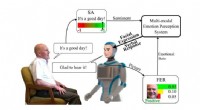
Facial recognition technology has come under fire in recent years for being biased against people of color and women. In an effort to address these concerns, Microsoft has announced improvements to its facial recognition algorithm that it says will make it more accurate and less biased. IBM is also offering a new tool to help developers build more inclusive facial recognition systems.
Microsoft's Improvements
Microsoft's new facial recognition algorithm, called "FairFace," is designed to be more accurate on faces of all races, genders, and ages. The company says that FairFace has been tested on a dataset of over 1 million images, and it outperforms other facial recognition algorithms on accuracy and bias.
In addition to improving accuracy, FairFace is also designed to be more transparent. Microsoft is providing a tool that allows users to see how the algorithm works and how it makes decisions. This transparency will help developers identify and address any potential biases in the algorithm.
IBM's Offering
IBM is offering a new tool called "AI Fairness 360" to help developers build more inclusive facial recognition systems. AI Fairness 360 provides a set of tools and techniques that can be used to identify and address bias in facial recognition algorithms.
The tools in AI Fairness 360 can be used to:
* Measure the accuracy of a facial recognition algorithm on different demographic groups.
* Identify the features that the algorithm is using to make decisions.
* Determine whether the algorithm is biased against any particular demographic group.
By using AI Fairness 360, developers can build facial recognition systems that are more accurate and less biased.
The Importance of Bias-Free Facial Recognition
Facial recognition technology is used in a variety of applications, including law enforcement, security, and marketing. It is important for facial recognition systems to be accurate and unbiased in order to avoid discrimination and other negative consequences.
Microsoft's improvements to its facial recognition algorithm and IBM's offering of AI Fairness 360 are important steps towards building more inclusive facial recognition systems. By making facial recognition technology more accurate and less biased, we can help to ensure that it is used for good and not for harm.