Coherent Light Source: A hologram is created using a coherent light source, typically a laser. Unlike regular light sources that emit waves with varying phases, lasers produce highly synchronized waves with the same phase.
Beam Splitting: The laser beam is split into two separate beams: the object beam and the reference beam. The object beam is directed towards the object or scene that needs to be recorded, while the reference beam travels directly to the recording medium.
Object Beam: The object beam interacts with the object, and the reflected or transmitted light from the object carries information about its shape, texture, and other details.
Reference Beam: The reference beam serves as a reference point and is combined with the object beam on the recording medium.
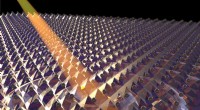
Interference: When the object beam and reference beam meet at the recording medium (usually a holographic film or plate), they interfere with each other. This interference creates a pattern that encodes the information about the object's light field, resulting in a hologram.
Recording the Hologram: The recording medium captures the interference pattern. The resulting hologram contains the information needed to recreate a three-dimensional image of the object.
Reconstruction: To view the holographic image, the recorded hologram is illuminated with another coherent light source, usually a laser. This process reconstructs the original light field of the object, creating a lifelike three-dimensional illusion that can be viewed from different angles.
In summary, holography is a technique that records and reconstructs the light field of an object using lasers and specialized recording materials, allowing the creation of three-dimensional holographic images.