Credit: CC0 Public Domain
Atomically dispersed M-N-C (M refers to transition metals) materials are regarded as the most promising alternatives to the Pt-based precious-metal catalysts for the electrochemical reduction of oxygen (ORR). However, the genuine active sites in M-N-C still remain elusive.
Recently, a joint research team led by Prof. ZHANG Tao, Prof. WANG Aiqin and Prof. YANG Xiaofeng from the Dalian Institute of Chemical Physics (DICP) of the Chinese Academy of Sciences (CAS) synthetized a uniform and well-defined Cu-N-C single-atom catalyst (Cu-N-C SAC), and unveiled the dynamic behavior of Cu-N-C SAC during the ORR process.
This study was published in Journal of the American Chemical Society on August 31. Prof. Li Jianfeng and Prof. Tian Zhongqun from Xiamen University were also involved in the study.
Local coordination structure of SAC plays an important role in catalytic performance. The active site structure in SACs will undergo dynamic changes during the reaction.
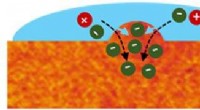
The researchers prepared a uniform and well-defined Cu-N4 SAC that exhibited a comparable alkaline ORR activity to Pt/C. They found that the as-prepared Cu-N4 structure in Cu-N4 SAC was firstly transformed to Cu-N3 structure driven by the applied potential, and then to HO-Cu-N2 structure under reaction conditions.
"These results provide a new vision to understand the reaction mechanism of M-N-C SACs as well as a guide to the rational design of more active SACs," said Prof. WANG Aiqin.