Rubber was known to native tribes in America for centuries before Europeans arrived. Europe began using rubber to make erasers in the 1700s -- the product's name came from its effectiveness in rubbing out errors. In the 21st century, manufacturers use both synthetic and natural rubber.
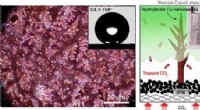
Natural rubber comes from latex, a milky substance produced by rubber plants. The Pilot Products manufacturing firm says that to tap the trees, rubber workers fasten cups to the trunk, then drive a spout into the bark. Latex spurts out under pressure and can run through the spout for 4 hours.
Manufacturers can use latex to make solid rubber or provide a rubber coating for products. For solid rubber, the manufacturer coagulates the latex with formic acid or lets it dry naturally, depending on the quality desired. For a coating -- "dipped goods" in industry speak -- the process reduces the latex into a concentrate.
Synthetic rubber became a military necessity in World War II. The Axis forces controlled 95 percent of the world's natural rubber supply, so the United States began a crash program to develop a synthetic alternative.
The Rubber Manufacturers Association says general-purpose synthetic rubber is produced by mixing soapsuds, butadiene -- a byproduct of oil refining -- and styrene, which can also come from oil refining. The manufacturer then coagulates the mix into crumbs.
Industrial researchers have developed other methods of synthesizing rubber since the original breakthrough. Different manufacturing methods create rubber suitable for different purposes and products.
The big weakness of rubber products in the 18th and early 19th century was temperature. Cold turned rubber brittle; heat reduced rubber goods to gluey sludge. In 1839, Charles Goodyear changed that with vulcanization, a treatment that made rubber temperature-resistant.
Vulcanization is still widely used in rubber manufacturing. The rubber is heated, then mixed with an additive such as sulfur, peroxide or bisphenol. This improves elasticity as well as weatherproofing the rubber. Manufacturers can use different additives to give the rubber slightly different properties.
The exact process for turning rubber into finished products varies depending on how the rubber will be used. For one example, Lee Rubber, a rubber-band manufacturer, describes how it manufactures rubber bands: