By Riti Gupta, Updated Mar 24, 2022
Whether you’re boiling pasta or watching frost form on a winter window, phase changes happen all the time. These transitions—solid, liquid, and gas—are accompanied by the absorption or release of heat, making them endothermic or exothermic processes.
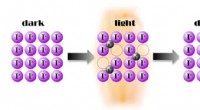
Every phase change involves a shift in particle motion and inter‑molecular attraction. In a solid, molecules vibrate around fixed positions. When heat is added, they gain kinetic energy, breaking the lattice and moving into a liquid. Further heating increases molecular motion until the substance vaporizes.
Water, with its strong hydrogen bonds, exemplifies this behavior. The energy required to disrupt these bonds during melting or boiling is why we feel the heat of steam or the warmth of boiling water.
In general, moving from a more ordered to a less ordered state—solid to liquid to gas—requires heat input, making the process endothermic. The reverse, from gas to liquid to solid, releases heat and is exothermic.
Remember: opposite phase changes involve opposite energy flows. Knowing one direction immediately tells you the other.
More ordered to less ordered: exothermic. Less ordered to more ordered: endothermic.