By David Stewart | Updated Mar 24, 2022
Image: KariHoglund/iStock/GettyImages
Enzymes possess a precise three‑dimensional conformation. Any alteration—whether by temperature, ionic strength, or pH—modifies that shape and, consequently, catalytic performance. Each enzyme displays a distinct pH optimum, the point at which its activity peaks. Deviations from this optimum distort the active site, diminishing the reaction rate. Catechol oxidase, for example, shows maximal activity around neutral pH 7.
Catechol oxidase (also known as tyrosinase, diphenol oxidase, or polyphenol oxidase) catalyzes the oxidation of catechol in the presence of oxygen to yield benzoquinone. Exposure to air further converts benzoquinone to melanin, giving the characteristic brown discoloration. The enzyme is abundant in many fruits and vegetables—including potatoes, apples, and bananas—where it is responsible for the browning seen when the tissue is cut and exposed to air.
From bananas: Mash one banana with twice its volume of water in a mortar and pestle, or blend it with water to produce a clear extract. Strain the mixture through a butter muslin and refrigerate.
From potatoes: Peel and chop a potato, then blend with 700 mL of cold, distilled water at high speed. Filter the mash through cheesecloth and store the juice in the refrigerator.
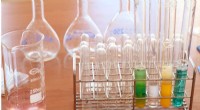
1. Prepare buffer solutions at pH 2, 4, 6, 7, and 8. Label five test tubes accordingly.
2. Fill each tube to one‑quarter capacity with the respective buffer.
3. Add 10 drops of catechol oxidase extract followed by 10 drops of catechol.
4. Shake each tube and record the color intensity on a 0–5 scale (0 = colorless, 5 = deep brown) immediately, then every five minutes for the next 20 minutes.
Plot the 20‑minute color intensity values with pH on the X‑axis and intensity on the Y‑axis. The peak of the resulting curve indicates the enzyme’s pH optimum. If the experiment is performed correctly, the maximum occurs at pH 7, confirming the enzyme’s greatest catalytic efficiency at neutral pH.
Both bananas and potatoes contain catechol, which can oxidize and contribute to the observed color. Keep the enzyme extract chilled on ice until use. Catechol is toxic; avoid skin contact and handle with gloves. If spills occur, clean with paper towels while wearing protective gloves.