By Pearl Lewis Updated Mar 24, 2022
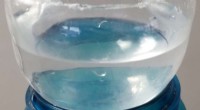
Copper sulfate is a bright blue crystalline salt commonly used in chemistry labs and educational experiments. Diluting it accurately is essential for obtaining the desired molarity and for safety. The following guide outlines a reliable, step‑by‑step method to convert a concentrated copper sulfate solution into a precisely defined dilute solution.
Before beginning, ensure you have appropriate PPE—gloves, goggles, and a lab coat—and work in a well‑ventilated area.
Divide the starting concentration by the target concentration. For instance, if you begin with a 1.0 mol dm-3 solution and wish to reach 0.1 mol dm-3, the dilution factor is 1.0 / 0.1 = 10, often expressed as a 1 : 10 ratio.
Divide the final volume you need by the dilution factor. To prepare 500 mL of the dilute solution, the unit volume is 500 mL / 10 = 50 mL.
Using a calibrated pipette, draw exactly one unit volume of the stock solution and add it to a clean volumetric flask. In the example above, transfer 50 mL of the 1.0 mol dm-3 stock.
Calculate the amount of water to add: (dilution factor – 1) × unit volume. For a factor of 10, add (10 – 1) × 50 mL = 450 mL of water.
Seal the flask with a stopper and gently invert or shake until the solution is homogeneous. The resulting mixture is now the desired dilute copper sulfate solution.