kenzaza/iStock/GettyImages
Van der Waals forces form electrostatic bonds between molecules. These intermolecular interactions—dipole‑dipole, dipole‑induced, and London dispersion—keep liquids and solids together, influencing properties such as surface tension and crystal structure. Although weaker than covalent bonds, they decisively shape the behavior of many materials.
Van der Waals forces are weak electrostatic interactions that bind molecules. From strongest to weakest: dipole‑dipole, dipole‑induced, and London dispersion. Hydrogen bonds, a specialized dipole‑dipole interaction, are especially potent and govern key physical traits.
1. Dipole‑dipole forces – Polar molecules with permanent positive and negative ends attract each other, creating a stable electrostatic bond.
2. Dipole‑induced dipole forces – A polar molecule induces a temporary dipole in a neighboring non‑polar molecule; the resulting attraction is weaker than true dipole‑dipole bonding.
3. London dispersion forces – Even non‑polar molecules experience fleeting electron density shifts, generating temporary dipoles that attract one another. These forces grow stronger in larger molecules with more delocalized electrons.
When a hydrogen atom is bonded to a highly electronegative element (F, O, N), the resulting strong dipole‑dipole attraction is called a hydrogen bond, a cornerstone of water’s unique properties.
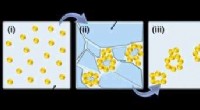
In gases, molecules are far apart and too energetic for Van der Waals forces to matter. In liquids, molecules remain mobile, repeatedly forming and breaking weak bonds, which allows them to flow while still exhibiting surface tension and viscosity. In solids, the reduced kinetic energy locks molecules into place, and the cumulative effect of Van der Waals interactions, alongside ionic or metallic bonds, defines crystal lattices, glassy structures, and polymer flexibility.
Thus, while covalent bonds dictate chemical identity, Van der Waals forces govern the physical character—density, melting point, hardness—of the material.