By Contributor Updated Mar 24, 2022
Growing Epsom salt crystals is a straightforward process that can be easily accomplished with a salt‑water solution and a suitable container. Placing a rock or other object inside provides a nucleation site for the crystals to form. Dissolve magnesium sulfate (Epsom salt) in hot water, then pour the saturated solution over the rock. As the water evaporates, the solution becomes supersaturated and crystals begin to nucleate and grow.
In the dissolution step, heat expands the water’s molecular spacing, allowing more magnesium sulfate to dissolve. When the solution reaches saturation, no further salt can remain in solution. Cooling reduces the spacing, driving the excess salt out of solution and into the solid phase—this is the beginning of crystal growth. Evaporation of water further concentrates the solution, accelerating the crystallization and yielding the characteristic needle‑like, prism‑shaped crystals of Epsom salt.
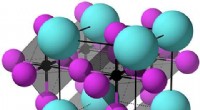
Different salts exhibit distinct crystalline geometries. Magnesium sulfate crystallizes in a prism‑like shape, whereas sodium chloride (table salt) forms cubic crystals. The shape you observe depends on the salt’s ionic composition and the conditions of evaporation.