By Keiron Audain, Updated Mar 24, 2022
All living cells rely on macromolecules—polymers built from smaller units called monomers. The formation of these polymers, known as polymerization, requires energy input and releases water as a by‑product. Each class of macromolecule follows a distinct polymerization pathway, yielding nucleic acids, proteins, carbohydrates, and lipids.
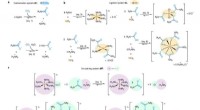
Proteins arise from amino acids, the monomers that possess a carboxyl group at one end and an amino group at the other. During polymerization, the carboxyl group of one amino acid reacts with the amino group of another, forming a covalent peptide bond. Successive peptide bonds link dozens or hundreds of amino acids into a linear polypeptide chain. The chain then folds into a precise three‑dimensional structure, giving the protein its unique biological function.
Nucleic acids—DNA and RNA—carry genetic information. Their monomer, the nucleotide, contains a five‑carbon sugar (pentose), a nitrogenous base, and a phosphate group. Polymerization links the phosphate group of one nucleotide to the hydroxyl group of the next, creating a phosphodiester backbone. In DNA, two complementary polynucleotide strands align and hydrogen‑bond between their bases, forming the characteristic double helix. RNA, being single‑stranded, adopts diverse folds for its roles in transcription, translation, and regulation.
Carbohydrates range from single sugars (monosaccharides) like glucose to complex polysaccharides. Monosaccharides join via glycosidic linkages—covalent bonds between the anomeric carbon of one sugar and a hydroxyl group of another. Disaccharides (e.g., sucrose) consist of two monosaccharides, while polysaccharides such as starch or cellulose contain many units. The type of sugar and the position of each glycosidic bond determine the carbohydrate’s physical properties and biological role.
Unlike the other macromolecules, lipids are not formed through polymerization. The core scaffold for all lipids is glycerol, a three‑carbon alcohol. Fats (triglycerides) result when three fatty acid chains esterify to glycerol. Phospholipids replace one fatty acid with a phosphate group, providing amphipathic properties essential for membrane structure. Steroids, such as cholesterol, are built on a four‑ring skeleton rather than a linear chain.
Understanding these polymerization processes illuminates the intricate chemistry that underpins cellular life.