By Paul Dohrman
Updated Mar 24, 2022
Specific gravity is the ratio of a substance’s density to the density of water at 4 °C and 1 atm. Because water’s density is 1.000 g cm⁻³ under those conditions, the specific gravity of a material is numerically equal to its density in grams per cubic centimetre to four significant figures. As a dimensionless ratio, specific gravity has no units.
The term “relative density” is a generalization that can use any reference fluid. When water is the reference, relative density is synonymous with specific gravity.
Both the reference and the test substance must be measured at the same temperature and pressure. A 15 °C change can alter the density of water by roughly 0.0018 g cm⁻³ (0.999973 g cm⁻³ at 4 °C versus 0.998203 g cm⁻³ at 20 °C). Therefore, accurate SG calculations require explicit conditions.
Specific weight (or weight density) is the weight of a substance per unit volume. It equals density multiplied by the local acceleration of gravity and has units (e.g., N cm⁻³). Unlike specific gravity, specific weight is not dimensionless.
Specific gravity determines whether an object will float or sink in the reference fluid. If SG > 1, the object is denser than water and will sink; if SG < 1, it will rise until it displaces a volume of water whose mass equals its own. This is a direct consequence of Archimedes’ principle.
Even a dense material such as iron can float if its shape allows it to displace enough water to balance its weight. A rounded, hollow iron bowl, for example, can remain buoyant. This explains why ships are built from high‑density materials yet remain afloat.
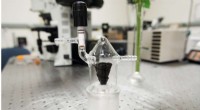
A pycnometer is a precise laboratory vessel used to determine the specific gravity of liquids. It incorporates a capillary tube in the stopper to eliminate surface‑tension effects on the volume measurement. By weighing the pycnometer filled with water and then with the test liquid, the density—and thus the specific gravity—can be calculated without needing an independent volume measurement, improving accuracy.