By Chris Deziel, Updated March 24, 2022
kotoffei/iStock/GettyImages
Ions are electrically unstable and quickly form chemical bonds. Atoms with unbalanced nuclei emit radiation until stability is achieved.
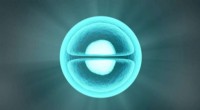
A stable atom has a neutral electrical charge—its protons are balanced by the same number of electrons—and a balanced nucleus where protons and neutrons are in equilibrium. While such atoms are not inert, their ability to form chemical compounds depends on their valence electrons, the outermost electrons available for bonding.
Gaining or losing an electron transforms an atom into an ion. A gain yields a cation, a loss yields an anion. This process is central to most chemical reactions, where atoms share electrons to achieve an outer shell of eight electrons, the stable “octet” configuration. For instance, in water, hydrogen atoms donate their single electron, becoming positively charged, while oxygen accepts two electrons, becoming negatively charged. The resulting dipole‑polar molecule is highly stable.
Free ions exist in solutions, making the solution an electrolyte capable of conducting electricity. Because of their charge, ions have a higher propensity to combine than neutral atoms, accelerating compound formation.
When a nucleus has an excess of protons or neutrons, it seeks equilibrium by emitting particles—a process known as radioactive decay. The high binding energy within the nucleus means emitted particles—alpha particles (two protons and two neutrons), beta particles (electrons or positrons), and gamma rays (high‑energy photons)—are very energetic.
During decay, the loss of a neutron typically results in a different isotope of the same element, whereas losing a proton transforms the atom into a different element altogether. The nucleus continues to emit radiation until the neutron‑to‑proton ratio stabilizes. The characteristic time for half of a sample to decay is called the isotope’s half‑life, which ranges from fractions of a second (e.g., Polonium‑215) to billions of years (e.g., Uranium‑238).