Image credit: Vadimborkin/iStock/GettyImages
The melting point of an element is the temperature at which it transitions from solid to liquid. Metals—characterized by malleability and excellent thermal and electrical conductivity—generally remain solid at ambient conditions because of their high melting points. Nonmetals, often brittle and poor conductors, may exist as solids, liquids, or gases depending on the element. Although both classes span a broad range of melting temperatures, metals consistently exhibit higher melting thresholds.
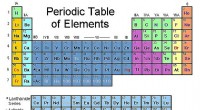
When all elemental melting points are plotted across the periodic table, a distinct pattern emerges. Moving from left to right across a period, melting points rise, peak at Group 14 (where carbon sits at the top), and then decline toward the right. Moving down a column, the rise‑and‑fall pattern diminishes, meaning elements in lower periods have more similar melting points.
Two bonding regimes elevate melting temperatures: covalent and metallic. Covalent bonds occur when electron pairs are shared evenly between atoms, drawing them closer together, especially when multiple shared pairs are involved. Metallic bonds arise from delocalized electrons that float among many nuclei, creating a “sea” of electrons that firmly holds the positively charged ions together.
Weak or absent bonds lead to lower melting points. Mercury, the metal with the lowest melting point—–38.9 °C (–37.9 °F)—does not form covalent or metallic bonds because it has zero electron affinity. Many nonmetals, such as oxygen and chlorine, are highly electronegative; they readily pull electrons from neighboring atoms, breaking bonds and resulting in sub‑zero melting temperatures.
A select group of metals—refractory metals—boasts melting points of at least 2,000 °C (3,632 °F). Their exceptional thermal resilience makes them indispensable in high‑temperature applications, from microelectronics to aerospace and nuclear reactors. Tungsten and molybdenum, for instance, are prime candidates for power‑plant components because their melting points allow them to withstand extreme heat.