By Mariecor Agravante | Updated Mar 24, 2022
vchal/iStock/GettyImages
At first glance, elements and compounds may seem distinct, yet they share core similarities that underline the structure of matter. Both are composed of atoms, held together by chemical bonds, and each exists as a pure, homogeneous substance.
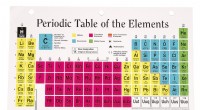
The atom is the fundamental building block of matter. When atoms combine, they form molecules. Two principal molecular types exist: elements—molecules of a single atomic species—and compounds—molecules composed of two or more different atoms. For example, elemental gold (Au) consists solely of gold atoms, while water (H₂O) combines hydrogen and oxygen.
Stability in both elements and compounds arises from interatomic bonds. The primary bond types are covalent, where electrons are shared, and ionic, where electrons transfer creating oppositely charged ions that attract. The diatomic oxygen molecule (O₂) is stabilized by a covalent bond, whereas common salt (NaCl) relies on an ionic bond between Na⁺ and Cl⁻. Even noble gases, normally inert, can form transient bonds under excitation—a process known as dimerization—producing laboratory compounds such as xenon hexafluoroplatinate (XePtF₆) and xenon dioxide (XeO₂).
Purity means a substance cannot be broken down without altering its essential properties. Elements meet this criterion because they consist of only one atomic species. Compounds are pure because each molecule is identical; decomposing a compound yields its constituent atoms or elements, which possess distinct properties.
Homogeneous materials exhibit uniform composition and appearance throughout. A pure silver plate, for instance, contains only silver atoms and displays the characteristic properties of silver everywhere. In contrast, a rusted tin surface is heterogeneous. Similarly, pure water is homogeneous; contamination introduces heterogeneity. Thus, both pure elements and pure compounds maintain consistent properties across their entirety.