By John Brennan
Updated Mar 24, 2022
Sodium hydroxide (NaOH), commonly known as lye, is a strong base widely used in laboratories, industry, and construction. When its concentration in water increases, several key chemical properties change. The following sections explain these effects in detail.
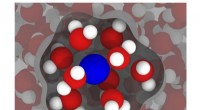
Upon dissolution, NaOH completely dissociates into sodium ions (Na⁺) and hydroxide ions (OH⁻). As the NaOH concentration rises, the density of OH⁻ in the solution grows proportionally, directly raising the solution’s basicity.
Pure water undergoes autoprotolysis, balancing H₃O⁺ and OH⁻ concentrations to give a neutral pH of 7. Adding NaOH introduces excess OH⁻, which accepts protons from H₃O⁺, shifting the equilibrium toward water formation. This reduction in H₃O⁺ concentration drives the pH upward, making the solution more alkaline. The relationship is logarithmic, so incremental increases in NaOH yield larger pH changes at lower concentrations.
NaOH readily neutralizes acids. The hydroxide ion accepts a proton from an acid, forming water (H₂O) and the conjugate base of the acid. In practice, adding NaOH to an acidic solution reduces acidity until the reaction reaches stoichiometric equivalence, where pH approaches neutral or slightly basic, depending on the acid’s strength and quantity.
While strong bases are not classic buffers, concentrated NaOH solutions can absorb small amounts of added acid without dramatic pH shifts. Because the pH scale is logarithmic, a high OH⁻ concentration means that each incremental proton neutralization changes pH less noticeably, effectively acting as a basic buffer.
Understanding these relationships is essential for precise pH control in chemical processes, safety protocols, and industrial applications.