By Matthew Perdue – Updated Mar 24, 2022
A polyatomic ion is a charged group of at least two covalently bonded atoms. While most carry a negative charge, some, like ammonium, are positively charged cations. These ions form the backbone of many familiar inorganic compounds.
NaOH consists of a sodium cation (Na+) and a hydroxide anion (OH-). The hydroxide ion, with a single extra electron, donates that electron to the sodium ion, creating a neutral ionic compound that is widely used as a strong base.
CaCO₃ is a key component of limestone, shells, and dental enamel. It features a calcium cation (Ca2+) bonded to a carbonate anion (CO32-), where the carbonate ion’s two extra electrons balance the calcium’s two positive charges.
Many acids—such as phosphoric (H3PO4), nitric (HNO3), and sulfuric (H2SO4)—are built around polyatomic ions (PO43-, NO3-, SO42-). In aqueous solution these acids dissociate to release H+ ions, the concentration of which determines the pH.
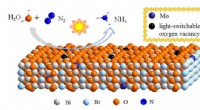
Ammonium is the most common positively charged polyatomic ion. Formed from a nitrogen atom bonded to four hydrogen atoms, it carries a +1 charge and pairs readily with anions like nitrate to form compounds such as ammonium nitrate (NH4NO3).
Understanding the behavior of polyatomic ions provides insight into the structure and reactivity of countless chemical substances encountered daily.