By Sean Butner – Updated Mar 24, 2022
Fenton’s reagent is a powerful oxidizing system composed of hydrogen peroxide (H₂O₂) and ferrous iron (Fe²⁺). It generates highly reactive hydroxyl radicals that break down a wide range of organic pollutants, including chlorinated solvents and phenols. Below is a detailed, safety‑first protocol for preparing and using this reagent in a laboratory setting.
Adjust the solution’s pH to the optimal range of 3.0–5.0 using a suitable buffer (e.g., acetate or citrate). Verify the pH with a calibrated pH meter and repeat the measurement until the value stabilizes.
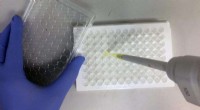
Introduce an aqueous solution of ferrous sulfate (FeSO₄·7H₂O) to the acidified medium. The typical concentration is 0.01–0.05 M Fe²⁺, but this can be tuned based on the contaminant load.
Slowly add a 30–35 % hydrogen peroxide solution while continuously stirring. Monitor the pH after each addition; adjust the H₂O₂ addition rate to maintain the pH between 3.0 and 6.0. Once the desired ratio of H₂O₂ to Fe²⁺ (commonly 5–10:1) is achieved, stop the addition.
For more detailed safety guidelines, consult the ATSDR Toxic Substances Portal and the EPA’s Fenton Reagent Overview.