MadamLead/iStock/GettyImages
A chemical reaction proceeds when reactant molecules collide with the correct orientation and sufficient kinetic energy. The likelihood of such productive collisions—and thus the reaction rate—is governed by several key factors.
Higher concentrations increase the frequency of collisions per unit time, raising the probability that a collision will possess the right energy and orientation. Empirically, reaction rate often scales with concentration following the rate law derived from collision theory.
Temperature raises the average kinetic energy of molecules. According to the Arrhenius equation, a modest rise in temperature can exponentially increase the rate constant, as more molecules surpass the activation energy threshold.
For gaseous reactants, compressing the system reduces the average intermolecular distance, thereby increasing collision frequency. The relationship is linear for ideal gases (rate ∝ pressure) but can deviate under non‑ideal conditions.
Reactions involving a solid phase benefit from a larger exposed surface. Fine powders provide a greater interfacial area, shortening diffusion paths for reactants and accelerating the reaction.
Reactants that share the same phase—both liquids, both gases, or both solids—interact more readily. A phase mismatch (e.g., solid‑gas) reduces collision probability because only a subset of molecules can reach the interface.
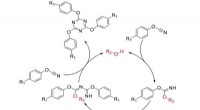
Catalysts lower the activation energy required for the transition state without being consumed, thus increasing the reaction rate. In biological systems, enzymes—protein catalysts—enable processes that would otherwise proceed too slowly for life.
Rate ↑ with: higher concentration, higher temperature, higher pressure, larger surface area, catalysts, and same-phase reactants.
Rate ↓ with: lower concentration, lower temperature, lower pressure, reduced surface area, catalysts absent, or phase incompatibility.