By Rosann Kozlowski, updated Aug 30, 2022
ismagilov/iStock/GettyImages
Joseph John Thomson’s groundbreaking work reshaped our understanding of the atom. A mathematician turned experimental physicist, Thomson discovered the electron, invented the mass spectrometer, and revealed the existence of isotopes—foundations that underpin modern physics and chemistry.
Born in Manchester, England, in 1856, Thomson was initially steered toward engineering. When his father’s death made that path untenable, he earned a scholarship to Trinity College, Cambridge, in 1876 to study mathematics. After becoming a Fellow in 1880, he was appointed Cavendish Professor of Experimental Physics in 1884, succeeding Lord Rayleigh.
Starting in 1894, Thomson investigated cathode rays—streams of charged particles within a vacuum tube. By comparing their behavior in air and vacuum, he observed that the particles traveled remarkably far, suggesting they were far smaller than atoms themselves.
Thomson refined his apparatus to deflect these rays using electric and magnetic fields. Measuring the deflection angles allowed him to calculate the charge‑to‑mass ratio, which remained constant across gases. He concluded that the particles were universal sub‑atomic constituents, which he termed “corpuscles.” These were later named electrons, the negatively charged building blocks of matter.
In 1904 Thomson proposed his famous plum‑pudding model: a positively charged sphere with electrons embedded like plums. Though later disproved by Rutherford’s 1911 nuclear model, it was the first attempt to incorporate sub‑atomic particles into an atomic theory.
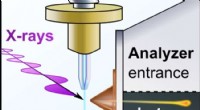
Thomson extended the cathode‑ray tube concept to positive ions, creating the first mass spectrometer. By adding a fluorescent screen and precise magnetic deflection, he could plot mass‑to‑charge ratios as distinct parabolas. Working with student Francis William Aston, Thomson’s instrument laid the groundwork for modern mass analysis.
Using the mass spectrometer, Thomson and Aston detected two distinct neon ion patterns in 1912—atomic masses 20 and 22—revealing that atoms of the same element could differ in mass. This discovery of isotopes was achieved before the neutron’s identification in 1932.
In 1906 Thomson received the Nobel Prize in Physics for his investigations on the conduction of electricity by gases, and he is celebrated for defining the electron, pioneering mass spectrometry, and identifying isotopes. His work continues to influence both physics and chemistry.
Thomson remained a Cambridge professor until his death in August 1940. He is buried in Westminster Abbey beside Isaac Newton and Charles Darwin.