By Kevin Beck, Updated Aug 30 2022
Eyematrix/iStock/GettyImages
In chemistry, an element is a substance composed of atoms that all contain the same number of protons. An element cannot be broken down into simpler substances using conventional chemical methods. As of 2018, scientists have confirmed 92 naturally occurring elements, plus 11 synthetic isotopes that appear only under laboratory conditions. Each element exists in one of three physical states—solid, liquid, or gas—under standard conditions.
Atoms are tiny clusters of protons, neutrons, and electrons. Hydrogen, the simplest, contains one proton and one electron, whereas uranium’s most common isotope has 92 protons, 92 electrons, and 146 neutrons. Protons carry a positive charge; electrons carry an equal negative charge; neutrons are neutral. The balance of protons and electrons determines an element’s identity, while variations in neutron count produce isotopes.
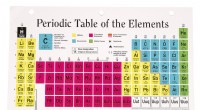
The periodic table is the cornerstone of modern chemistry, arranging all known elements by ascending atomic number—the count of protons in the nucleus. This ordering reveals repeating patterns of chemical behavior, hence the name “periodic.” While the table has 113 entries (118 as of 2023), elements are grouped into families that reflect shared properties.
When you examine the table, you’ll notice that the upper rows contain gaps—these are elements that have not yet been discovered or synthesized. The layout incorporates columns (groups) and rows (periods) that reflect electron configuration and reactivity.
Historically, elements are divided into three broad categories: metals, nonmetals, and metalloids. Nonmetals are limited to seven core elements—hydrogen (H), carbon (C), nitrogen (N), oxygen (O), phosphorus (P), sulfur (S), and selenium (Se). Additional nonmetal families include the halogens (F, Cl, Br, I, At) and the noble gases (He, Ne, Ar, Kr, Xe, Ra). Metalloids, such as silicon and arsenic, exhibit intermediate characteristics.
Out of the 113 elements, 88 are classified as metals. Despite their diversity, metals share several hallmark traits:
Metals are further categorized into five main groups:
Adding these groups together gives a total of 88 metals: 6 alkali + 6 alkaline earth + 40 transition + 28 rare‑earth + 8 unspecified.
Metalloids occupy a niche between metals and nonmetals, combining conductive properties with semiconductor behavior. The seven common metalloids are:
These elements are solid at room temperature and play crucial roles in modern electronics, often forming alloys with metallic elements to tailor electrical and thermal characteristics.
For an interactive exploration of the periodic table, visit our resources page.