By Jack Gerard | Updated Aug 30, 2022
dra_schwartz/E+/GettyImages
In chemistry, the term “substrate” can mean different things depending on the context, yet it always refers to a key participant in a reaction. Understanding how substrates are used across chemical disciplines will clarify their role in both general and biochemical processes.
A substrate in chemistry is the medium in which a reaction occurs, and more specifically, the reactant that is transformed into new products. While a substrate often remains chemically stable before the reaction, an external catalyst—such as heat, light, or a chemical agent—commonly initiates the transformation. The catalyst accelerates the reaction but is not consumed, so the final products arise solely from changes to the substrate.
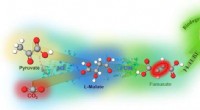
In biochemistry, the concept narrows to “enzyme substrates.” These are organic molecules that enzymes bind to and convert into products. Enzymes act as highly specific catalysts, lowering the activation energy of the reaction. Like general‑chemical catalysts, enzymes are regenerated after the reaction and do not become part of the final product.
Across chemistry, a substrate is any substance that a catalyst or another chemical agent acts upon to undergo transformation. Whether in a simple reaction or a complex enzymatic pathway, the substrate itself experiences a change in composition, while the catalyst or enzyme remains unchanged.
Other scientific fields also use the term, often with nuanced meanings. In biology, a substrate may be a growth surface for organisms; in geology, it refers to the underlying rock or material beneath soil. Despite these variations, the central idea remains a foundational material upon which processes occur.