By Vaibhav Rakesh – Updated Aug 30, 2022
Totojang/iStock/GettyImages
A chemical reaction is driven by collisions between reactant molecules. The speed of a reaction can be increased by manipulating several key factors that influence collision frequency and energy. Below are four evidence‑based approaches that reliably boost reaction rates.
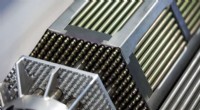
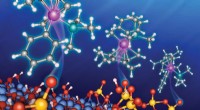
A catalyst is a substance that lowers the activation energy of a reaction without being consumed or altering the final products. Because it creates an alternative, lower‑energy pathway, catalysts dramatically increase the number of productive collisions. For example, the decomposition of potassium chlorate (KClO₃) begins at 392 °F when manganese dioxide (MnO₂) is present, whereas the same reaction without a catalyst does not start until 715 °F.
Raising temperature injects kinetic energy into reactant molecules, causing them to move faster and collide more often. The relationship is often linear up to a point, after which side reactions or decomposition may dominate. A common illustration is sugar dissolving more rapidly in hot water than in cold water, as elevated temperature accelerates the diffusion and collision processes.
Collision theory predicts that higher reactant concentration increases the probability of collisions. For gases, this can be achieved by raising the pressure, thereby compressing molecules into a smaller volume. In liquids or solids, simply adding more reactant mass raises the overall collision rate and speeds the reaction.
More exposed surface area means more molecules are available for contact at any given time. Converting reactants into powdered or finely divided forms maximizes this effect. Powdered sugar dissolves faster than a sugar cube, and combustion is far more rapid when fuel is in fine particulate form.
These strategies—catalysts, temperature, concentration, and surface area—are cornerstones of chemical kinetics and are routinely employed in industrial processes, laboratories, and everyday applications to control reaction speed.