By David Weedmark – Updated Aug 30, 2022
Understanding salts is essential for any chemistry curriculum. A salt is an ionic compound formed from the neutralization of an acid and a base, which dissociates into ions in water. Depending on the relative strength of the constituent ions, the resulting aqueous solution can be acidic, basic, or neutral.
Salt names follow the convention of listing the cation first, followed by the anion. For instance, table salt is sodium chloride (NaCl).
Commonly known as table salt, sodium chloride is the most frequently encountered salt in both laboratory and culinary settings. In its solid state, NaCl forms a cubic lattice and is safe to handle. The Na⁺ ion is a very weak Lewis acid due to its large ionic radius and low charge density, while the Cl⁻ ion behaves essentially as a neutral base. When dissolved in water, NaCl produces a neutral solution, making it a standard reference salt in many analytical protocols.
Potassium dichromate is an orange‑colored oxidizing salt containing potassium, chromium, and oxygen. It is highly toxic and a known carcinogen, especially due to its chromate content. Laboratories must treat it with caution: wear nitrile gloves, work under a fume hood, and neutralize spills with a dilute sodium bicarbonate solution before disposal. Due to its oxidizing properties, it poses a fire risk and should never be discarded with general waste.
Calcium chloride shares a white appearance with NaCl but offers superior de‑icing performance. It dissociates into three ions (Ca²⁺ and 2 Cl⁻) compared to NaCl’s two, allowing it to melt ice down to –25 °F (–39 °C). Its hygroscopic nature means it readily absorbs atmospheric moisture, forming a liquid solution even when left uncovered. This property makes it valuable for road treatment and for laboratory drying agents.
Derived from sulfuric acid, sodium bisulfate retains one acidic proton, giving it acidic characteristics. It is widely used as a dry acid in commercial applications such as pH adjustment for spas, pool maintenance, and concrete cleaning. The solid salt appears as white beads. It is hazardous to skin and ingestion; therefore, nitrile gloves are recommended, and immediate medical attention should be sought if ingested.
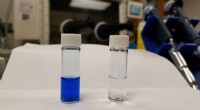
Copper sulfate is a blue crystalline salt composed of copper, sulfur, and oxygen. Upon dissolution, the solution becomes colorless. When an iron object contacts CuSO₄, a red film of metallic copper deposits onto the iron surface—a classic example of a displacement reaction where iron replaces copper in solution to form iron(II) sulfate. This phenomenon is often demonstrated in classroom demonstrations of redox chemistry.