By Adam Cloe, Updated Aug 30, 2022
Image: kirisa99/iStock/GettyImages
Stomach acid, primarily composed of hydrochloric acid (HCl), plays a vital role in digestion and the protection of the gastrointestinal tract. For laboratory demonstrations or educational projects, creating a realistic simulated stomach acid allows students to observe how various foods and medications interact with gastric acid. The following guide outlines a safe and accurate method to prepare a 0.155 M solution that mimics the acidity and ionic composition of human stomach fluid.
Decide how many liters of solution you require. Working in metric units simplifies calculations and ensures consistency across experiments.
The typical gastric HCl concentration is about 0.155 M. To prepare one liter of solution, you need 5.6 g of HCl. Use a calibrated balance to weigh the acid accurately.
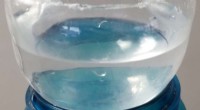
Always add acid to water, not the reverse, to avoid exothermic splattering. Pour the measured water into the container first, then slowly add the HCl while stirring gently. Cap the container securely and shake until the acid is fully dissolved.
Stomach fluid also contains sodium and potassium ions. Add 5 g of sodium chloride and 5 g of potassium chloride per liter of solution. Stir until completely dissolved.