By Eri Luxton
Updated Aug 30, 2022
Zeolites are a family of aluminosilicate minerals renowned for their unique porous structures and wide-ranging industrial applications. They can encapsulate water molecules within their crystalline lattice, making them exceptionally useful in adsorption and ion‑exchange processes.
In general, the formula for a zeolite can be expressed as M2/nO·Al2O3·xSiO2·yH2O. Here:
According to research from the State University of New York (SUNY), each zeolite structure maintains at least one silicon atom for every aluminum atom, ensuring charge balance and structural stability. SUNY Research Foundation
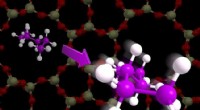
When exposed to heat, zeolites release their bound water and become receptive to other molecules through adsorption—a surface‑binding process distinct from absorption. The University of California, San Diego (UCSD) notes that the pore size of zeolite crystals selectively targets molecules of specific diameters, enabling precise filtration and separation capabilities. UCSD Research
Zeolites’ high adsorption capacity makes them indispensable across various sectors:
Commercially available zeolites are predominantly synthetic, as natural specimens often contain unwanted metal and mineral impurities. Their engineered purity allows for consistent performance in targeted applications.