By Robert Alley, updated Aug 30 2022
Crystalline solids arrange atoms or molecules in a repeating lattice. Two principal categories—covalent (network) crystals and molecular crystals—exhibit markedly different physical behaviors, all stemming from a single structural distinction.

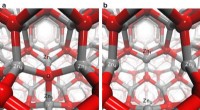
Covalent crystals are held together by covalent bonds, meaning each atom in the lattice shares electrons with its neighbors. In a network solid, an atom typically bonds to four others, creating a continuous, three‑dimensional framework that behaves as one gigantic molecule. This strong covalent network results in exceptional hardness, high melting points, and electrical insulation.
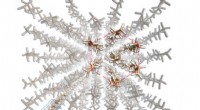
Molecular crystals, by contrast, consist of discrete atoms or molecules that occupy lattice sites. The forces holding these lattices together are weak—van der Waals, dipole–dipole, or hydrogen bonds—rather than covalent. Consequently, the crystals are loosely bound, can be separated easily, and generally have lower melting points.
Typical covalent crystals include diamond, quartz, and silicon carbide, all of which feature densely packed, tightly bonded structures. Molecular crystals are represented by substances such as water (H₂O) and carbon dioxide (CO₂), where each molecule retains its identity and can be disrupted with relatively little energy.
The robust covalent network in covalent crystals requires enormous energy to break, yielding melting points often exceeding 2,000 °C. In contrast, the weak intermolecular forces in molecular crystals result in melting points far lower—ice melts at 0 °C, CO₂ sublimates at –78 °C, and many organic crystals melt below 100 °C.