By Jack Brubaker, Updated Aug 30 2022
obeyleesin/iStock/GettyImages
In chemistry, concentrations are expressed in a variety of units. A solution consists of a solute—the compound present in the smaller amount—and a solvent. One of the most common ways to express concentration is mass percent (also known as weight percent), calculated as (mass of solute ÷ mass of solution) × 100. When solutions are extremely dilute, the mass‑percent value becomes very small, so chemists often scale the ratio by 10⁹ instead of 100, producing parts per billion (ppb).
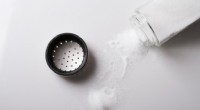
First, identify the mass of the solute and the mass of the entire solution. For a water‑based solution, 1 mL of liquid equals 1 g, so 1 L of water equals 1 000 g. For example, dissolving 0.005 g of sodium chloride (NaCl) in water and then diluting to a final volume of 1.0 L gives 0.005 g of solute in 1 000 g of solution.
Divide the solute mass by the solution mass: 0.005 g ÷ 1 000 g = 5 × 10⁻⁶. This ratio represents the concentration in fractional terms.
Multiply the ratio by 1 000 000 000 to express it as parts per billion: 5 × 10⁻⁶ × 10⁹ = 5 000 ppb.
For aqueous solutions, the ppb calculation can be simplified to micrograms of solute per liter of solution. Convert grams to micrograms by multiplying by 1 000 000.