Geo-grafika/iStock/Getty Images
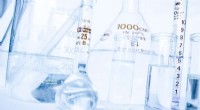
Extraction is a fundamental technique in organic chemistry used to separate an organic solvent from an aqueous phase. For a successful extraction, the two solvents must be immiscible, forming distinct layers that can be mechanically separated. Washing the organic layer with sodium carbonate enhances this separation by driving any residual aqueous phase into the water layer, thereby improving purity. This approach is commonly employed to isolate methylene chloride, a key component of paint strippers.
When the organic phase originates from an acidic solution, treating it with sodium carbonate—a mild base—neutralizes the acid and forms a water‑soluble salt. This salt is then carried away with the aqueous layer during the wash, leaving the organic product cleaner.
Washing also reduces the solubility of organic compounds in water, preventing the two layers from becoming mixed. This property makes the separation process more efficient and reliable.
If the mixture appears homogenous, sodium carbonate can still be effective: it promotes phase separation by altering the polarity of the aqueous layer, ultimately allowing the distinct organic layer to settle.
Proper handling of sodium carbonate—wearing gloves and eye protection—ensures safe laboratory practice.