By Jack Ori Updated Aug 30, 2022
Metabolism encompasses all chemical reactions that occur within or between cells. These reactions fall into two broad categories: anabolism, the synthesis of larger molecules from smaller precursors, and catabolism, the breakdown of complex molecules into simpler ones.
Metabolic pathways are the coordinated series of enzyme‑catalyzed steps that sustain life. For instance, glycolysis—a catabolic pathway—cleaves glucose into pyruvate, while the electron transport chain culminates in the anabolic formation of water from hydrogen and oxygen.
Most intracellular reactions cannot occur spontaneously; they require a catalyst. Enzymes—large, versatile protein molecules—serve this role by lowering the activation energy needed for reactions, all while remaining unchanged themselves. Unlike heat, which cannot be precisely targeted, enzymes achieve specificity and efficiency.
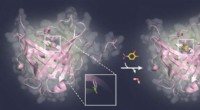
Enzymes recognize and bind only to their specific substrates. Each substrate presents a unique three‑dimensional shape, often described as a groove formed by a folded polypeptide chain. The complementary enzyme fits into this groove like a key in a lock, a concept first articulated by Emil Fischer in 1894. Although the model captures the essence of specificity, modern studies reveal that many enzymes undergo conformational changes during catalysis, allowing them to release reaction products in an uneven manner.
Sucrase exemplifies the lock‑and‑key mechanism. Its active site is shaped to accommodate sucrose, enabling the enzyme to cleave the disaccharide into glucose and fructose in the presence of water. Once the reaction is complete, sucrase is liberated to act on additional sucrose molecules.
Pancreatic lipase catalyzes the hydrolysis of triglycerides into two monoglycerides and one fatty acid. Unlike sucrose, which splits into two identical halves, triglycerides yield products of differing sizes, illustrating that not all enzymatic reactions follow a perfectly symmetrical pattern.