By Oxana Fox
Updated Aug 30, 2022
Calcium hydroxide, commonly known as slaked lime (Ca(OH)₂), is a basic inorganic compound widely used in industry, from construction to water treatment. Accurate identification is essential in laboratories and on‑site quality control. This guide outlines two simple, yet definitive tests: a pH measurement and a sulphuric‑acid precipitation reaction.
Measure 5 mL of the liquid sample with a clean beaker.
Dip a fresh strip of pH paper into the sample, then remove it immediately.
Compare the strip’s colour to the scale on the paper. A pH between 10 and 11 confirms a basic solution, consistent with calcium hydroxide.
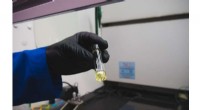
Fill a plastic pipette with a 5 % sulphuric acid solution.
Carefully add 5–10 drops of the acid to the beaker.
If a white precipitate forms, calcium ions are present. The reaction is:
Ca(OH)₂ + H₂SO₄ → CaSO₄ (precipitate) + 2H₂O.
Wear gloves and safety goggles when handling acids. Dispose of waste according to local regulations.