By Contributing Writer. Updated Aug 30, 2022.
RHJ/iStock/GettyImages
Sodium bicarbonate (NaHCO₃), commonly known as baking soda, is a white crystalline powder. A closely related compound, sodium carbonate (Na₂CO₃), is often used in cleaning and laundry. The simplest way to detect a carbonate salt is to add a dilute acid, which liberates carbon dioxide gas. The reaction is:
NaHCO₃ + HCl → NaCl + H₂O + CO₂To differentiate between NaHCO₃ and Na₂CO₃, a pH assessment follows the bubbling test.
Weigh approximately 2 g of the sample and place it in a 15 ml beaker.
Add about 10 ml of distilled water to the beaker. Stir until the powder is fully dissolved.
Transfer roughly half of the solution to a second 15 ml beaker.
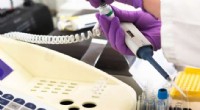
Using a plastic pipette, introduce about 2 ml of 0.1 M hydrochloric acid into the first beaker. Vigorous effervescence indicates a carbonate salt; if so, continue.
Cut a 1.5‑inch strip from a hydrion pH paper sheet.
Dip the strip’s end into the solution in the second beaker for 1–2 seconds, then remove it. The exposed segment will change color.
Match the strip’s color to the scale on the pH paper package. A pH around 8 confirms sodium bicarbonate, while a pH of 9.5–10 indicates sodium carbonate.