Yuji Sakai/Getty Images
Human‑generated CO₂ is a leading driver of climate change. While direct air capture has historically targeted high‑concentration flue gases from power plants, a breakthrough material now shows promise for extracting CO₂ from the much lower levels found in everyday outdoor air.
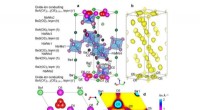
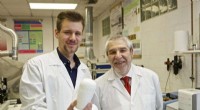
In a recent Nature publication, researchers at the University of California, Berkeley, in collaboration with colleagues in Chicago and Germany, described COF‑999—a robust covalent organic framework that captures CO₂ from ambient air. COF‑999 is built on some of the strongest chemical bonds known—covalent carbon–nitrogen and carbon–carbon double bonds—and its pores are functionalized with amines, enhancing CO₂ uptake.
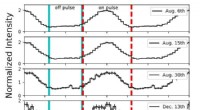
"We placed a fine powder of the material in a tube and flowed Berkeley outdoor air—ranging from 410 to 517 parts per million—through it. After 100 cycles, the material showed no visible degradation and removed CO₂ entirely from the air," said Omar Yaghi, UC Berkeley's James and Neeltje Tretter Chair Professor of Chemistry and senior author of the study.
The result is a material with unprecedented performance in direct air capture. Its ability to bind CO₂ at ambient concentrations offers a new pathway to keep atmospheric CO₂ below 450 ppm, a threshold that scientists say is necessary to avert the worst climate impacts.
NicoElNino/Shutterstock
Zihui Zhou, first author and UC Berkeley graduate student, explained that while atmospheric CO₂ is currently above 420 ppm, the concentration is projected to reach 500–550 ppm before flue‑gas capture technologies are fully deployed. To return to pre‑industrial levels—around 400 ppm or lower—direct air capture will be essential.
Remarkably, less than 0.5 lb of COF‑999 can absorb the same amount of CO₂ that a mature tree sequesters in one year, potentially restoring atmospheric levels to those seen a century ago. The material also captures CO₂ ten times faster than existing direct air capture systems and releases it at lower temperatures, improving energy efficiency.
In addition, the latest iteration of COF‑999 has endured 300 continuous capture–release cycles without any loss of capacity, indicating a durability that could support thousands of cycles over its lifetime. Yaghi noted that the team anticipates doubling the material’s capacity by 2025.