BLKstudio/Shutterstock
On today’s roads, two distinct vehicle categories dominate: Electric Vehicles (EVs) and conventional internal combustion engine (ICE) cars. While they share a common goal—transporting passengers—there are profound differences in how they power themselves, particularly when it comes to battery technology.
Both EVs and ICE cars rely on batteries to store electrical energy. EV batteries are charged from external sources such as home chargers or public stations. ICE cars, by contrast, use a lead‑acid battery that is constantly recharged by the engine’s alternator. Once charged, either battery ensures that a vehicle’s electrical systems operate independently of the grid. The similarities stop there; the differences begin.
From an engineering perspective, the batteries are essentially from different worlds. An EV’s battery pack is comparable to a twin‑size mattress—half a ton in weight, composed of hundreds of cells, and built with an array of rare metals. An ICE car’s battery is a simple lead‑acid unit, small, inexpensive, and well understood. To highlight the disparities, let’s examine them through three lenses: chemistry, size, and energy capacity.
Sinhyu Photographer/Shutterstock
Lead‑acid batteries, used in ICE vehicles for over a century, contain lead dioxide, lead sulfate, sulfuric acid, and pure lead. The electrodes are primarily lead oxides, occasionally blended with tin, antimony, or calcium. The rest of the battery is typically plastic.
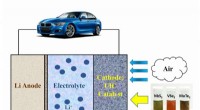
EVs almost universally use lithium‑ion chemistry. Lithium‑ion batteries are prized for their light weight and high energy density, making them ideal for smartphones, tablets, and laptops as well. In addition to lithium, EV batteries often incorporate manganese, cobalt, nickel, and carbon‑based compounds such as graphite and steel. While not classified as rare earth metals, many of these materials are scarce, which is why used EV batteries are frequently recycled for their valuable content.
Lead‑acid batteries are also widely recycled—about 99% of spent units are reclaimed for lead. Although the extraction process is inexpensive, it poses significant environmental and health risks, which can offset the benefits of recycling.
Peepo/Getty Images
ICE batteries are designed only to power a car’s electronics and ignition, and they are continuously recharged while the engine runs. EV batteries, however, must provide enough power to move the entire vehicle for hours without a charge. This requirement leads to a massive increase in size and weight.
A standard lead‑acid battery typically weighs 30–50 pounds. An EV battery can range from 1,000 to 2,000 pounds. To give you a concrete example, the 40 kWh Nissan Leaf battery measures approximately 62 × 47 × 10.5 inches—roughly 30,000 cubic inches, the size of a twin‑size mattress.
EV batteries are often hidden under the vehicle’s floor to maximize space and distribute weight efficiently. This placement also helps protect the pack from impact and keeps the vehicle’s center of gravity low.
asharkyu/Shutterstock
Lithium‑ion batteries boast an energy density of about 150–250 Wh/kg, compared to 30–40 Wh/kg for lead‑acid. They also have a lower mass density—lithium is less dense than lead—making EV batteries more energy‑ and space‑efficient.
Typical EV battery capacities range from 75 kWh to 135 kWh, with larger electric trucks pushing beyond 200 kWh. A single charge can provide a range of roughly 200 miles. In contrast, a standard 12‑V lead‑acid battery holds about 48 Ah, which is just under 0.6 kWh. To match the energy of a 100 kWh EV battery, you would need more than 160 lead‑acid batteries.