Many of us recall the thrill of classroom experiments—balloon‑powered cars, baking soda volcanoes, and the classic orange‑peel‑and‑balloon test that shows a citrus peel can cause a balloon to burst without a sharp object. These simple demonstrations bring abstract chemistry into vivid, everyday experience.
Researchers at the Chemical Educational Xchange investigated the mechanism behind the orange‑peel trick. The key compound is limonene, a hydrocarbon that gives oranges their characteristic scent. Limonene is non‑polar, meaning its carbon and hydrogen atoms share electrons evenly, creating no charge imbalance.
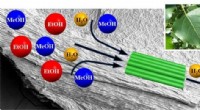
Balloon rubber is also a non‑polar hydrocarbon. According to the “like dissolves like” principle, a non‑polar solvent can dissolve a non‑polar material. When limonene oil contacts the balloon’s surface, it dissolves the outer layer of the rubber, weakening the structure and causing the balloon to pop. The team confirmed this by isolating limonene from orange peels and applying it directly to a balloon, replicating the effect in a YouTube demonstration by Tommy Technetium.
Not all balloons are equally vulnerable. Natural rubber contains long isoprene chains that can separate, but many commercial balloons are made from vulcanized rubber—a material strengthened by sulfur cross‑links that dramatically increase toughness. Infrared spectroscopy studies show that most birthday balloons are vulcanized, making them more resistant to limonene. Water balloons, which use non‑vulcanized rubber, are much more fragile and easily burst when exposed to orange peel juice. Lemons, which also contain limonene, can produce the same effect.
These findings highlight how subtle chemical properties govern everyday phenomena and offer a tangible lesson in the power of non‑polar interactions.