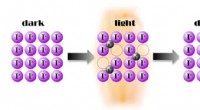
* Ionic bonds involve a transfer of electrons: This creates ions (charged atoms) that are attracted to each other due to their opposite charges.
* Ionic compounds are formed by the electrostatic attraction between ions: This attraction can involve multiple ions of different elements.
* Ionic compounds are not limited to two atoms: For example, sodium chloride (NaCl) has one sodium ion (Na+) and one chloride ion (Cl-) but compounds like calcium chloride (CaCl2) have one calcium ion (Ca2+) and two chloride ions (Cl-).
Therefore, the number of atoms involved in an ionic bond depends on the specific ionic compound being considered.