1. Octet Rule:
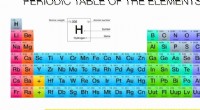
* Most atoms strive to have a full outer shell of electrons (usually 8, hence the "octet rule"). This configuration gives them a stable, low-energy state.
* Atoms with incomplete outer shells are less stable and more reactive.
2. Electrostatic Interactions:
* Chemical bonds arise from electrostatic interactions between atoms.
* These interactions can be:
* Attractive: between oppositely charged particles (electrons and protons)
* Repulsive: between like-charged particles
3. Types of Chemical Bonds:
* Ionic bonds: formed by the transfer of electrons between atoms, creating ions (charged particles) that are attracted to each other.
* Covalent bonds: formed by the sharing of electrons between atoms, where both atoms benefit from the shared electrons, filling their outer shells.
* Metallic bonds: formed by the sharing of electrons among a lattice of metal atoms. This creates a "sea of electrons" responsible for the unique properties of metals like conductivity.
4. Examples:
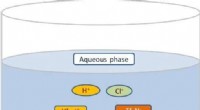
* Sodium (Na) and Chlorine (Cl): Sodium has one electron in its outer shell, while chlorine needs one more to complete its octet. Sodium *donates* its electron to chlorine, creating a positively charged sodium ion (Na+) and a negatively charged chloride ion (Cl-), which are attracted to each other forming an ionic bond.
* Hydrogen (H) and Oxygen (O): Each hydrogen atom needs one electron to complete its outer shell, and oxygen needs two. They share electrons, forming covalent bonds in a water molecule (H2O).
In summary:
Atoms form chemical bonds to achieve a more stable, lower energy state. They do this by either gaining, losing, or sharing electrons to fill their outer shells and minimize their overall energy. The type of bond formed depends on the specific properties of the atoms involved.