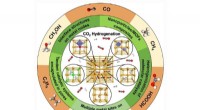
Let's break down the structure and function of each element:
Carbon (C)
* Structure: Carbon has 4 valence electrons, meaning it can form four covalent bonds with other atoms. This allows carbon to form long chains, branched structures, and rings, creating a vast diversity of organic molecules.
* Function: Carbon is the backbone of all organic molecules, including carbohydrates, lipids, proteins, and nucleic acids. It forms the structural framework of these molecules, providing stability and flexibility.
Oxygen (O)
* Structure: Oxygen has 6 valence electrons and typically forms two covalent bonds. It can be found in single bonds, double bonds, and even as a free radical.
* Function: Oxygen plays a crucial role in cellular respiration, where it is used to break down glucose and produce energy (ATP). Oxygen is also a component of water (H2O), which is essential for life.
Nitrogen (N)
* Structure: Nitrogen has 5 valence electrons and typically forms three covalent bonds. It can be found in single, double, and triple bonds.
* Function: Nitrogen is a key component of amino acids, the building blocks of proteins. It is also found in nucleic acids (DNA and RNA), which carry genetic information.
Hydrogen (H)
* Structure: Hydrogen has 1 valence electron and typically forms one covalent bond.
* Function: Hydrogen is a component of water and many organic molecules, including carbohydrates, lipids, and proteins. It plays a role in maintaining the structure of these molecules and in various chemical reactions.
In summary:
These four elements are essential for life because they can combine in various ways to form the complex molecules that make up living organisms. Their unique structures and bonding properties allow them to perform a wide range of functions that are critical for life.
To understand the structure and function of specific molecules, you need to know the specific combination of these elements and how they are arranged. For example, glucose (C6H12O6) is a carbohydrate composed of carbon, hydrogen, and oxygen in a specific arrangement, which gives it its unique properties and function as a source of energy.