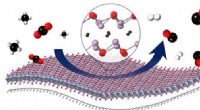
* The reactants: These are the substances that go into the reaction. They're written on the left side of the equation.
* The products: These are the new substances that are formed by the reaction. They're written on the right side of the equation.
* The stoichiometry: This refers to the relative amounts of each reactant and product involved. It's represented by the coefficients in front of each chemical formula.
* The conditions: Sometimes, a chemical equation will include symbols or annotations to indicate the conditions under which the reaction takes place, like heat, pressure, or a catalyst.
Here's how to break down a chemical equation to understand what's happening:
Example:
The combustion of methane:
CH4 + 2O2 → CO2 + 2H2O
Interpretation:
* Reactants: Methane (CH4) and Oxygen (O2)
* Products: Carbon dioxide (CO2) and Water (H2O)
* Stoichiometry:
* One molecule of methane reacts with two molecules of oxygen.
* One molecule of carbon dioxide and two molecules of water are produced.
* Conditions: This reaction requires heat (usually a spark or flame) to initiate.
Key Points:
* Conservation of Mass: Chemical equations must follow the law of conservation of mass, meaning the total mass of the reactants must equal the total mass of the products. This is reflected in the balanced coefficients.
* Arrows: The arrow (→) indicates the direction of the reaction. It can be a single arrow for a one-way reaction or double arrows (⇌) for a reversible reaction where products can react to form reactants again.
* States of Matter: Sometimes, the physical state of each substance is indicated in parentheses after the formula (e.g., (s) for solid, (l) for liquid, (g) for gas, (aq) for aqueous solution).
Overall, chemical equations are a powerful tool for understanding and communicating the changes that occur during chemical reactions. They allow us to visualize the process and predict the outcome of a reaction based on the reactants involved and the conditions under which it occurs.