Ionic Compounds
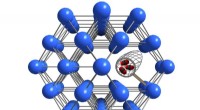
* Solid State: Do not conduct electricity. The ions are held tightly in a crystal lattice and cannot move freely.
* Liquid State (molten): Conduct electricity. When molten, the ions are free to move and carry the electric current.
* Aqueous Solution: Conduct electricity. When dissolved in water, the ions dissociate and become mobile, allowing for electrical conduction.
Covalent Compounds
* Solid State: Most do not conduct electricity. Covalent compounds share electrons, and these electrons are typically localized in the bonds, not free to move.
* Liquid State: Most do not conduct electricity. Similar to the solid state, the electrons are still mostly localized in the bonds.
* Aqueous Solution: Some do conduct electricity, but only if they are polar and ionize in water. This is because the ionization process creates ions that can then carry the current. For example, hydrochloric acid (HCl) dissolves in water to form H+ and Cl- ions, making it conductive.
In summary:
* Ionic compounds conduct electricity in their molten state and in aqueous solutions.
* Covalent compounds generally do not conduct electricity, except for polar covalent compounds that ionize in water.
Note: There are some exceptions to these general rules. For instance, graphite, a form of carbon, is a covalent compound that can conduct electricity in its solid state due to its unique structure.