Here's why:
* Electrolytes are substances that conduct electricity when dissolved in water. This is because they dissociate into charged particles called ions.
* Ions are atoms or molecules that have gained or lost electrons, giving them a net positive or negative charge.
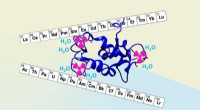
* When an electrolyte dissolves in water, the water molecules surround the ions and pull them apart, breaking the ionic bonds.
* The resulting solution contains free-moving ions, allowing the solution to conduct electricity.
Example:
Sodium chloride (NaCl) is an electrolyte. When it dissolves in water, it dissociates into sodium ions (Na+) and chloride ions (Cl-):
NaCl(s) → Na+(aq) + Cl-(aq)
The "aq" indicates that the ions are dissolved in water (aqueous solution).