1. Initial Reaction:
* Sodium readily reacts with oxygen in the air, forming sodium oxide (Na₂O). This reaction is exothermic, meaning it releases heat and is quite vigorous.
* The reaction is represented by the equation:
4Na + O₂ → 2Na₂O
2. Further Oxidation:
* As the temperature increases, sodium oxide can react further with oxygen to form sodium peroxide (Na₂O₂).
* The reaction is represented by the equation:
2Na₂O + O₂ → 2Na₂O₂
3. Formation of Sodium Hydroxide:
* Sodium oxide and peroxide can react with moisture in the air to form sodium hydroxide (NaOH).
* The reaction is represented by the equation:
Na₂O + H₂O → 2NaOH
4. Formation of a Coating:
* The reaction products (sodium oxide, peroxide, and hydroxide) form a white, powdery coating on the surface of the sodium metal. This coating is a mixture of these compounds and can be quite thick.
5. Ignition:
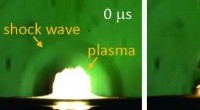
* If the temperature is high enough, the sodium can ignite and burn brightly, producing a yellow flame. This is due to the reaction of sodium with oxygen and the release of heat and light.
Overall:
The overall reaction of sodium with air is complex and depends on the temperature and the amount of oxygen present. The main products are sodium oxide, sodium peroxide, and sodium hydroxide, which form a coating on the surface of the sodium metal. At high temperatures, sodium can ignite and burn brightly.
Safety Considerations:
It's important to note that sodium is highly reactive and can react violently with water. It should be handled with extreme care and always kept away from water and any sources of moisture.