Here's a breakdown:
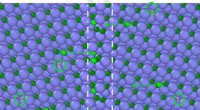
* Solid: A substance in its solid state has molecules tightly packed together in a fixed structure.
* Gas: In a gaseous state, molecules are widely spaced and move freely.
* Sublimation: The process of skipping the liquid phase entirely, going directly from solid to gas.
Examples of Sublimation:
* Dry ice: Solid carbon dioxide (CO2) sublimates at room temperature and pressure, producing a cold, dense gas.
* Naphthalene: Mothballs are made of naphthalene, which sublimates slowly, releasing a vapor that repels moths.
* Freeze-drying: This technique uses sublimation to remove water from food, preserving it without damaging its nutrients.
Factors affecting Sublimation:
* Temperature: Higher temperatures increase the energy of molecules, making sublimation more likely.
* Pressure: Lower pressure allows molecules to escape the solid phase more easily, promoting sublimation.
* Intermolecular forces: Substances with weak intermolecular forces are more likely to sublimate.
Difference between Sublimation and Evaporation:
While both involve transitions from a condensed phase to a gas, they differ in the starting phase:
* Sublimation: Solid → Gas
* Evaporation: Liquid → Gas
Let me know if you have any other questions!