Here's the breakdown:
* Adsorption: Involves the accumulation of a substance (the adsorbate) on the surface of another substance (the adsorbent). This accumulation happens due to weak intermolecular forces like van der Waals forces or hydrogen bonding. No chemical bonds are formed.
* Absorption: This is a chemical process where a substance (the absorbate) is taken in by another substance (the absorbent). This involves the absorbate penetrating the absorbent's structure and forming new chemical bonds.
Key Differences:
* Nature of Interaction: Adsorption involves surface interactions, while absorption involves bulk interactions.
* Chemical Changes: Adsorption doesn't involve any chemical changes, while absorption often results in new chemical species being formed.
* Reversibility: Adsorption is generally reversible, meaning the adsorbate can be removed from the adsorbent surface. Absorption is often irreversible, or the reverse process requires significant energy input.
Example:
* Adsorption: A charcoal filter adsorbing odors from the air. The odor molecules stick to the charcoal's surface but don't change chemically.
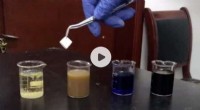
* Absorption: A sponge soaking up water. The water molecules penetrate the sponge's structure and are physically held within it.
So, while adsorption does involve one substance being taken up by another, it's a physical process driven by weak interactions, not chemical reactions.