The Nucleus: The Atom's Core
* Protons: Positively charged particles located in the nucleus. The number of protons defines the element (e.g., all carbon atoms have 6 protons).
* Neutrons: Neutrally charged particles also located in the nucleus. Neutrons contribute to the atom's mass but not its charge. The number of neutrons can vary within an element, creating isotopes.
The Electron Cloud: Surrounding the Nucleus
* Electrons: Negatively charged particles that orbit the nucleus in a cloud-like region called the electron cloud. They are much smaller than protons and neutrons and are constantly moving around the nucleus.
Key Points
* The Nucleus is Dense: Almost all of an atom's mass is concentrated in the tiny nucleus.
* Electrons Determine Chemical Behavior: The arrangement of electrons in the electron cloud determines how an atom interacts with other atoms and forms chemical bonds.
* Quantum Model: The modern understanding of electron behavior is based on the quantum mechanical model, which describes electrons as existing in specific energy levels or orbitals.
Analogy
Think of an atom like a miniature solar system:
* The sun is the nucleus (containing protons and neutrons).
* The planets are the electrons, orbiting the sun in different paths.
Visual Representation
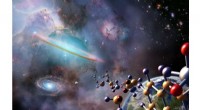
You can find many diagrams and 3D models online that show the structure of an atom. These will help you visualize the arrangement of protons, neutrons, and electrons.