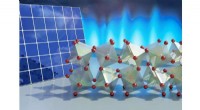
* Solid State: In their solid state, ionic compounds exist as a rigid lattice structure. The ions are held tightly in fixed positions by strong electrostatic forces. These forces restrict the movement of ions, preventing them from carrying an electric current.
* Molten or Aqueous State: When an ionic compound melts or dissolves in water, the ions break free from the lattice structure and become mobile. These mobile ions can now move freely and carry an electric current.
How it works:
1. Electrolyte: When an ionic compound is dissolved in water or melted, it forms an electrolyte. This means it contains free-moving ions that can conduct electricity.
2. Electric Field: When an electric field is applied across the electrolyte, the positive ions migrate towards the negative electrode (cathode) and the negative ions migrate towards the positive electrode (anode).
3. Electric Current: This movement of ions creates an electric current, allowing the flow of electricity through the electrolyte.
In summary: Ionic compounds conduct electricity only when their ions are free to move, which happens in the molten or dissolved state. In their solid state, the fixed ion positions prevent conductivity.