1. Analytical Chemistry:
* Focus: Identification and quantification of chemical substances in various samples.
* Methods: Uses instruments and techniques to analyze the composition, structure, and properties of matter.
* Applications: Quality control, environmental monitoring, forensic science, pharmaceutical analysis.
2. Organic Chemistry:
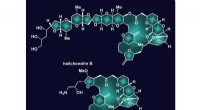
* Focus: Study of carbon-containing compounds, including their structure, properties, and reactions.
* Subfields: Petroleum chemistry, polymer chemistry, medicinal chemistry.
* Applications: Development of new drugs, materials, and fuels.
3. Inorganic Chemistry:
* Focus: Study of the properties and reactions of all elements except carbon.
* Subfields: Coordination chemistry, organometallic chemistry, solid-state chemistry.
* Applications: Development of new catalysts, materials, and batteries.
4. Physical Chemistry:
* Focus: Study of the fundamental principles governing chemical phenomena, including energy, thermodynamics, kinetics, and quantum mechanics.
* Subfields: Spectroscopy, chemical kinetics, electrochemistry.
* Applications: Understanding and predicting chemical reactions, developing new technologies.
5. Biochemistry:
* Focus: Study of the chemical processes that occur within living organisms.
* Subfields: Enzymology, molecular biology, genetics.
* Applications: Understanding disease processes, developing new therapies.
6. Environmental Chemistry:
* Focus: Study of the chemical processes that occur in the environment and their impact on human health and ecosystems.
* Subfields: Pollution control, water treatment, climate change.
* Applications: Protecting the environment and mitigating pollution.
7. Computational Chemistry:
* Focus: Use of computer simulations and theoretical models to study chemical systems.
* Subfields: Molecular modeling, quantum chemistry, drug design.
* Applications: Predicting chemical reactions, designing new molecules.
8. Nuclear Chemistry:
* Focus: Study of the structure, properties, and reactions of atomic nuclei.
* Subfields: Radiochemistry, nuclear medicine.
* Applications: Nuclear energy, medical imaging, radiocarbon dating.
9. Polymer Chemistry:
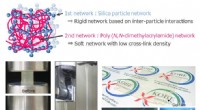
* Focus: Study of the synthesis, properties, and applications of polymers.
* Subfields: Plastics, rubber, fibers.
* Applications: Development of new materials with diverse applications.
10. Geochemistry:
* Focus: Study of the chemical composition and processes of the Earth.
* Subfields: Mineralogy, petrology, geochronology.
* Applications: Understanding the Earth's formation, evolution, and resource potential.
11. Astrochemistry:
* Focus: Study of the chemical composition and processes in space.
* Subfields: Interstellar chemistry, planetary science.
* Applications: Understanding the origins of life and the evolution of the universe.
This list is not exhaustive, but it provides a broad overview of the major branches of chemistry. Each branch has its own unique focus, methods, and applications. It is important to note that there are many overlaps between these branches, and many chemists work in interdisciplinary fields.