1. Ionic Compounds in Solid State:
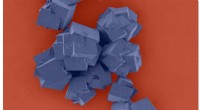
* Crystalline Structure: Ionic compounds exist in a crystalline structure where positively charged cations and negatively charged anions are arranged in a fixed, rigid lattice.
* No Free Ions: The ions are tightly held in place by electrostatic forces, preventing them from moving freely. This lack of mobile charge carriers means that solid ionic compounds are poor conductors of electricity.
2. Dissolving in Water:
* Polar Solvent: Water is a polar solvent, meaning it has a positive end (hydrogen) and a negative end (oxygen).
* Ion-Dipole Interactions: The positive ends of water molecules are attracted to the anions of the ionic compound, and the negative ends of water molecules are attracted to the cations.
* Solvation: These attractions pull the ions apart from the crystal lattice, surrounding them with water molecules. This process is called solvation.
3. Electrical Conductivity in Solution:
* Free Ions: Once the ionic compound is dissolved, the ions are now free to move throughout the solution. These mobile, charged species can carry electric current.
* Increased Conductivity: The presence of these mobile ions makes the solution a good conductor of electricity. The more ions present, the higher the conductivity.
In Summary:
The key factor is the movement of charge carriers. Solid ionic compounds lack free ions, so they are poor conductors. When dissolved in water, the ions are liberated and become mobile, leading to significant increases in electrical conductivity.