Here's a breakdown:
* Atoms are made up of a nucleus (containing protons and neutrons) surrounded by a cloud of negatively charged electrons.
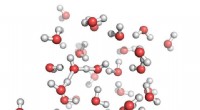
* Molecules are formed when two or more atoms bond together. These bonds are formed by the sharing or transfer of electrons between the atoms.
The space between atoms and molecules is filled with the following:
* Electron clouds: The electrons surrounding the atoms are constantly moving and create a diffuse cloud of negative charge. This cloud is responsible for the interactions between atoms and molecules, including chemical bonding.
* Electromagnetic fields: The movement of electrons creates electromagnetic fields that extend into the space between atoms and molecules. These fields play a role in determining the strength and type of interactions between molecules.
* Empty space: While the space between atoms and molecules isn't completely empty, it does contain a significant amount of "empty" space compared to the volume occupied by the atoms themselves.
Important points to remember:
* The electrons in the space between atoms are not stationary, they are constantly moving and interacting with each other.
* The arrangement of these electrons and the strength of their interactions determine the properties of the substance, such as its melting point, boiling point, and reactivity.
* The "empty" space between atoms and molecules is not truly empty, but rather filled with the energy and fields associated with the electrons.
Understanding the nature of the space between atoms and molecules is crucial for understanding the properties and behavior of matter at the atomic and molecular level.