Here's a breakdown:
Characteristics of salts of weak acids and bases:
* Hydrolysis: These salts react with water, causing the solution's pH to deviate from neutral.
* pH dependent on the strength of the acid and base: The pH of the solution will depend on whether the acid or base is stronger.
* If the weak acid is stronger than the weak base, the solution will be acidic.
* If the weak base is stronger than the weak acid, the solution will be basic.
* If the acid and base have similar strengths, the solution will be approximately neutral.
* Buffering capacity: Some salts of weak acids and bases can act as buffers, meaning they can resist changes in pH when small amounts of acid or base are added. This is because the salt and its hydrolysis products form an equilibrium that can absorb added H+ or OH- ions.
Examples:
* Ammonium acetate (NH4CH3COO): This is a salt formed from the weak acid acetic acid (CH3COOH) and the weak base ammonia (NH3). The solution will be slightly acidic because acetic acid is a stronger acid than ammonia is a base.
* Sodium carbonate (Na2CO3): This is a salt formed from the weak acid carbonic acid (H2CO3) and the strong base sodium hydroxide (NaOH). The solution will be basic because sodium hydroxide is a stronger base than carbonic acid is an acid.
Understanding Hydrolysis:
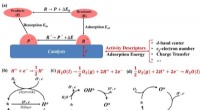
The hydrolysis reaction for a salt of a weak acid and weak base involves the salt ions reacting with water molecules to form the weak acid and weak base again. For example, the hydrolysis of ammonium acetate can be represented as:
NH4+ (aq) + H2O(l) ⇌ NH3(aq) + H3O+ (aq)
CH3COO- (aq) + H2O(l) ⇌ CH3COOH(aq) + OH- (aq)
The formation of H3O+ (hydronium ions) makes the solution slightly acidic.
In summary:
Salts of weak acids and weak bases can be understood through their hydrolysis reactions, which influence the pH of the solution based on the relative strengths of the acid and base. These salts can also contribute to buffering effects in solutions.