Here's a breakdown of the key differences between ionic and molecular compounds:
1. Bonding:
* Ionic compounds: Formed through electrostatic attraction between oppositely charged ions. These ions are formed by the complete transfer of electrons from a metal to a nonmetal.
* Molecular compounds: Formed by the sharing of electrons between nonmetal atoms. This sharing creates covalent bonds.
2. Structure:
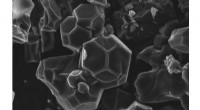
* Ionic compounds: Form crystalline structures with repeating, three-dimensional arrays of ions.
* Molecular compounds: Often exist as discrete molecules with specific geometries determined by the arrangement of atoms and their shared electrons.
3. Physical Properties:
| Property | Ionic Compounds | Molecular Compounds |
|-----------------|-----------------|--------------------|
| State at room temperature | Typically solids | Can be solids, liquids, or gases |
| Melting point | High melting points | Lower melting points |
| Boiling point | High boiling points | Lower boiling points |
| Solubility | Often soluble in water | Can be soluble or insoluble in water |
| Electrical conductivity | Good conductors in molten state or dissolved in water | Poor conductors |
4. Examples:
* Ionic compounds: NaCl (table salt), CaCO3 (calcium carbonate), MgO (magnesium oxide)
* Molecular compounds: H2O (water), CO2 (carbon dioxide), CH4 (methane)
5. Key Differences Summary:
| Feature | Ionic Compounds | Molecular Compounds |
|-----------------|-----------------|--------------------|
| Bonding | Electrostatic attraction (ionic bonds) | Covalent bonds |
| Structure | Crystalline lattice | Discrete molecules |
| Physical Properties | High melting/boiling points, often soluble in water, good electrical conductivity (in molten state or solution) | Lower melting/boiling points, varying solubility in water, poor electrical conductivity |
Important Note: Some compounds may exhibit characteristics of both ionic and molecular bonding, making them difficult to categorize definitively. These are often referred to as "polar covalent" compounds.
Understanding the differences between ionic and molecular compounds is crucial for comprehending their properties, reactions, and applications in various fields like chemistry, biology, and materials science.